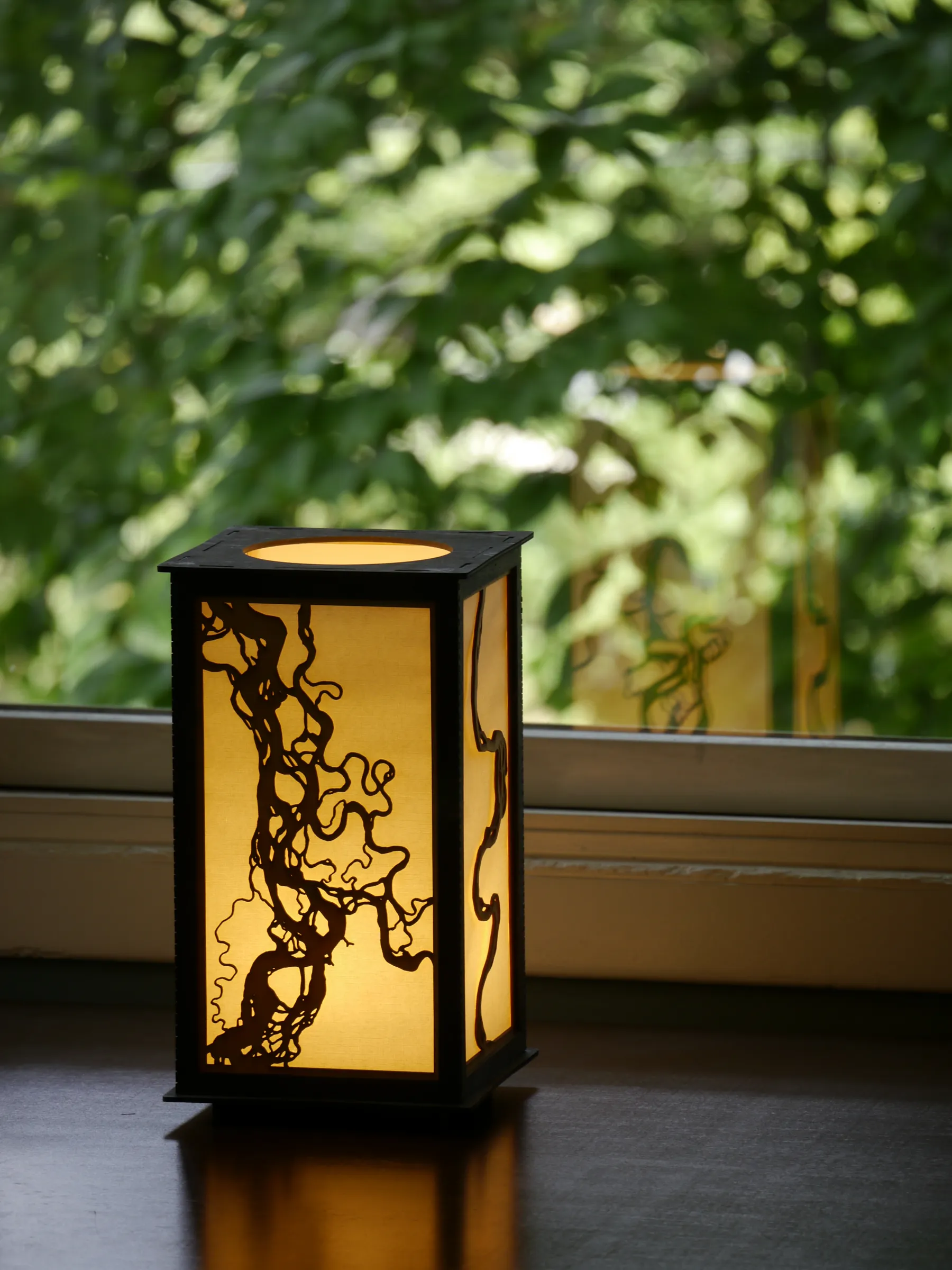
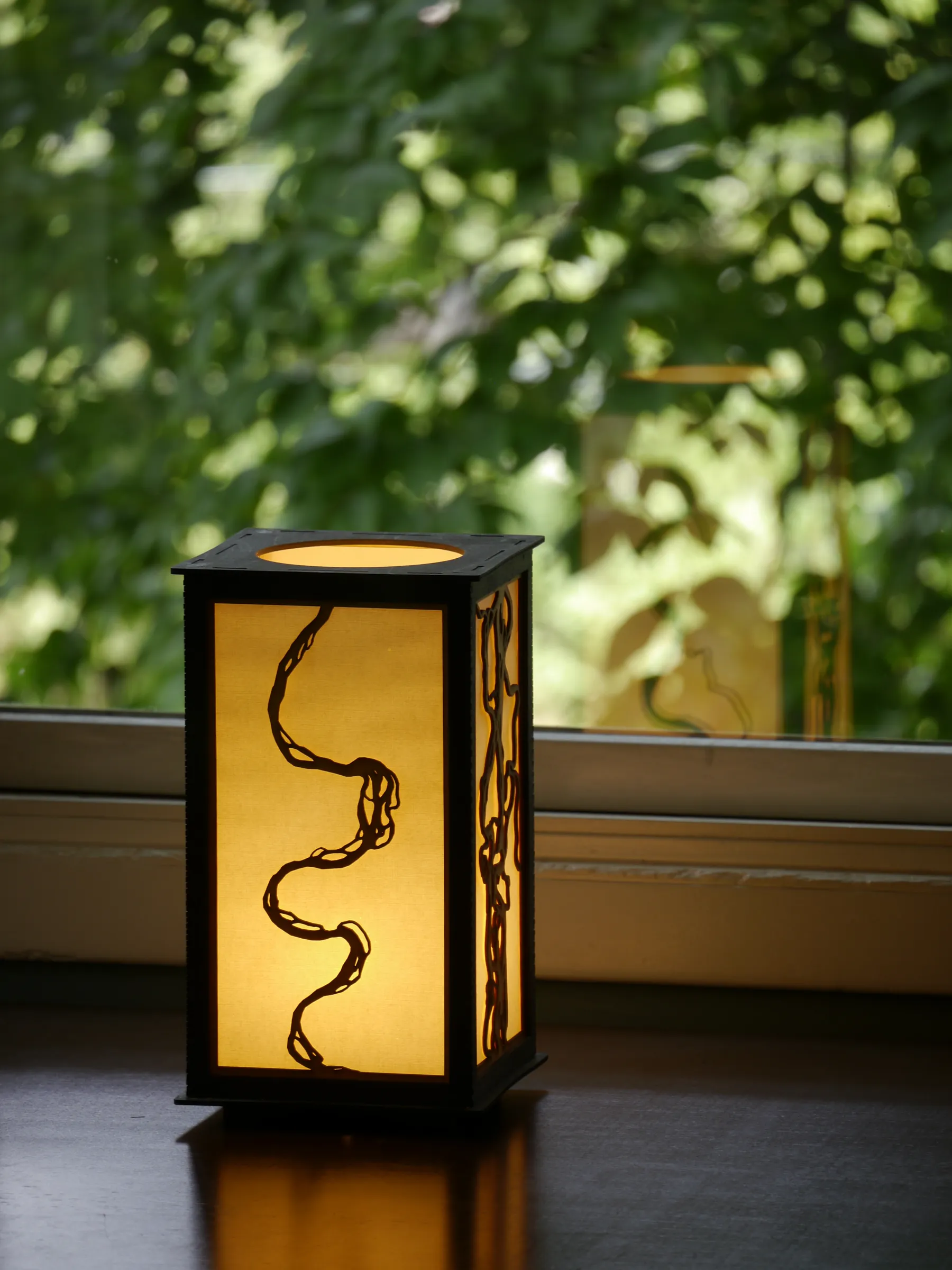
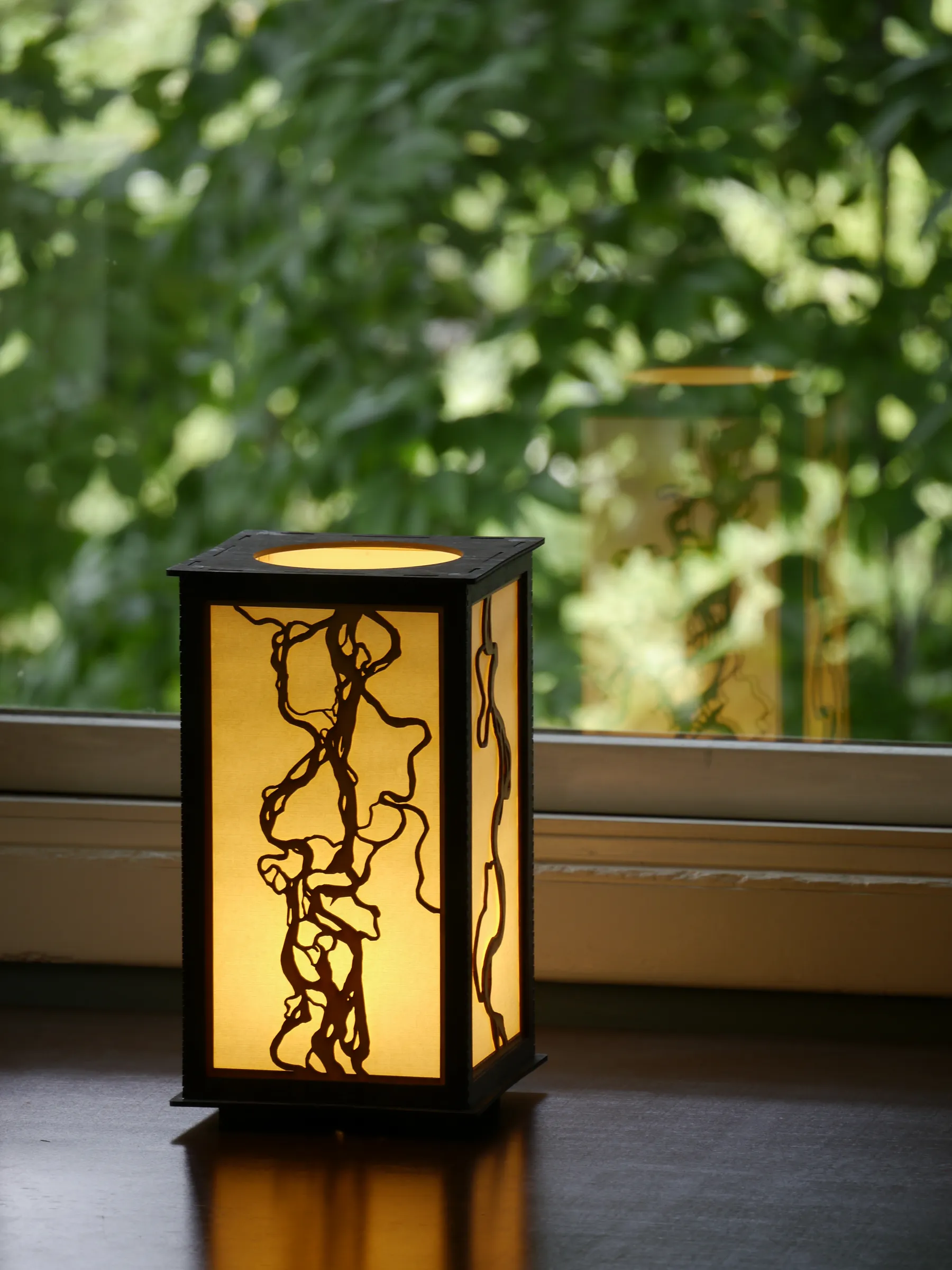
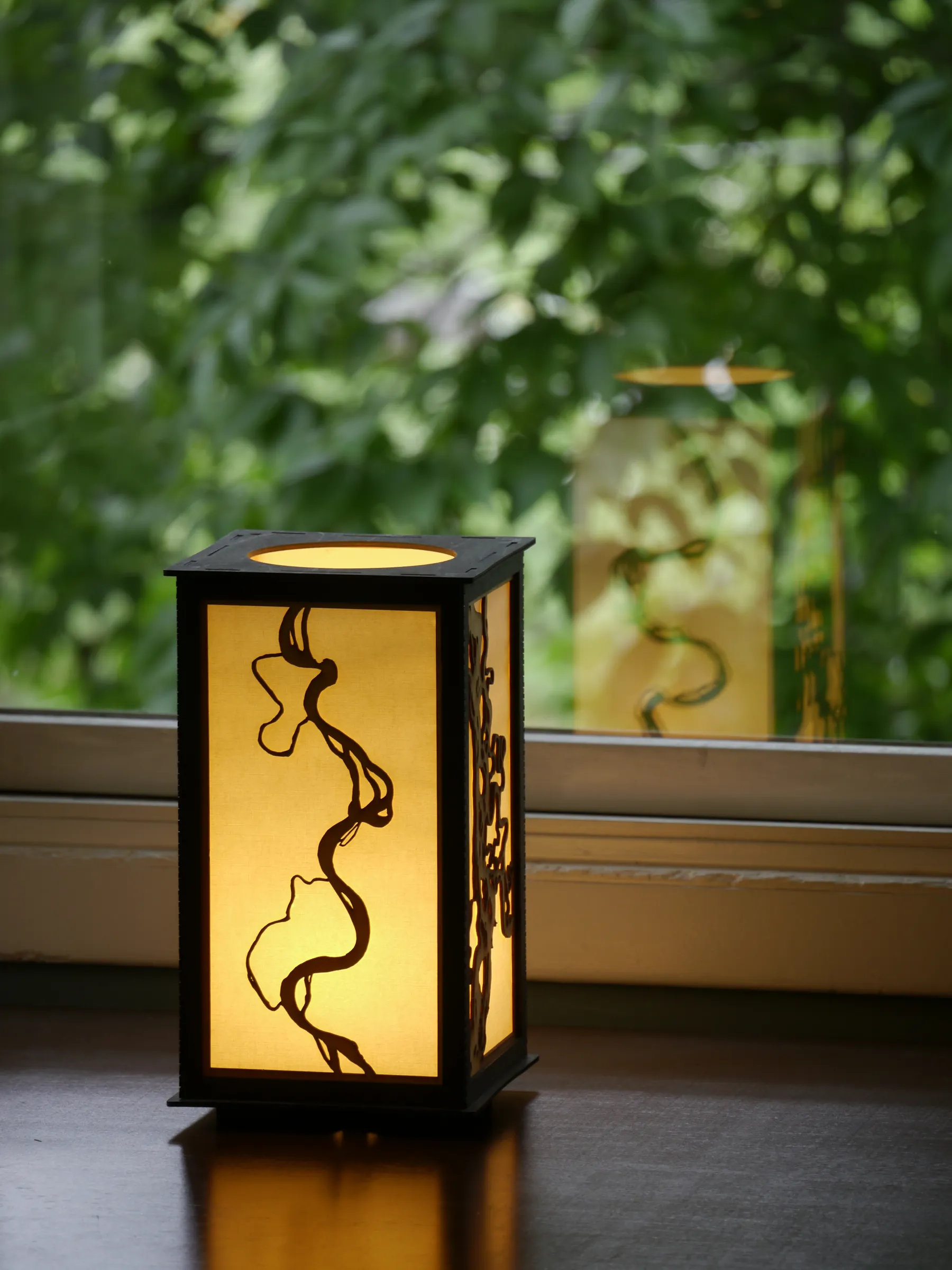
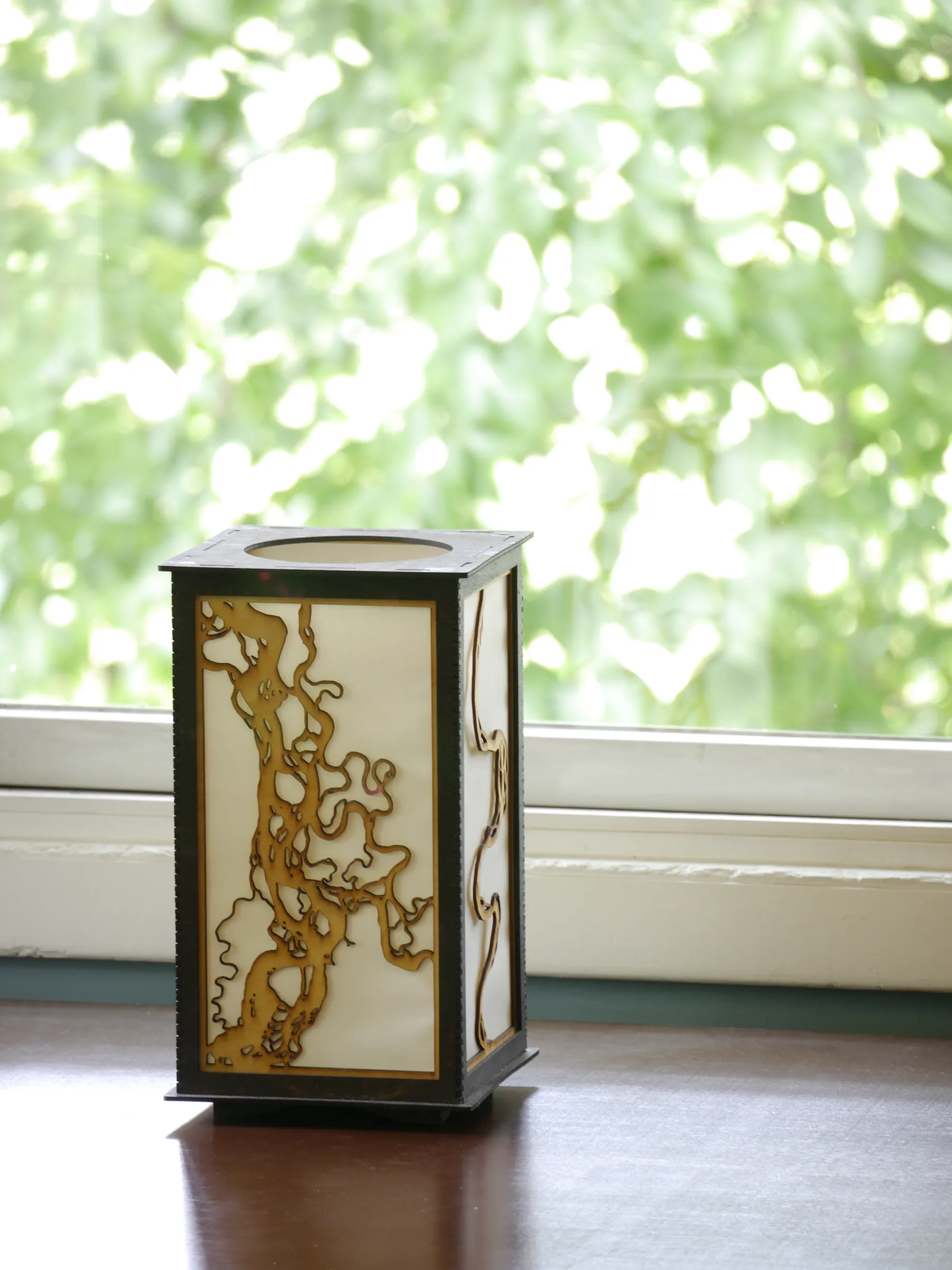
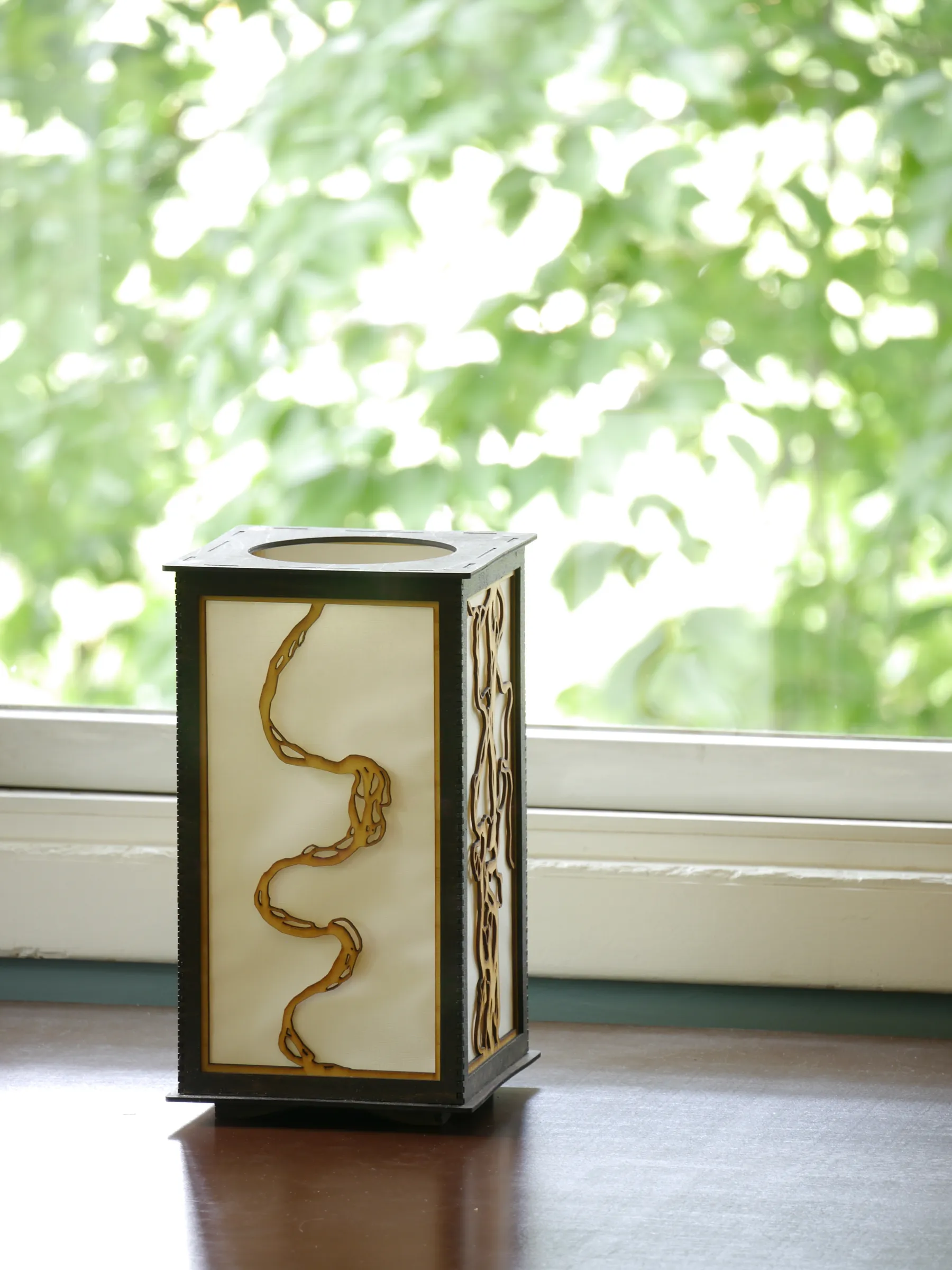
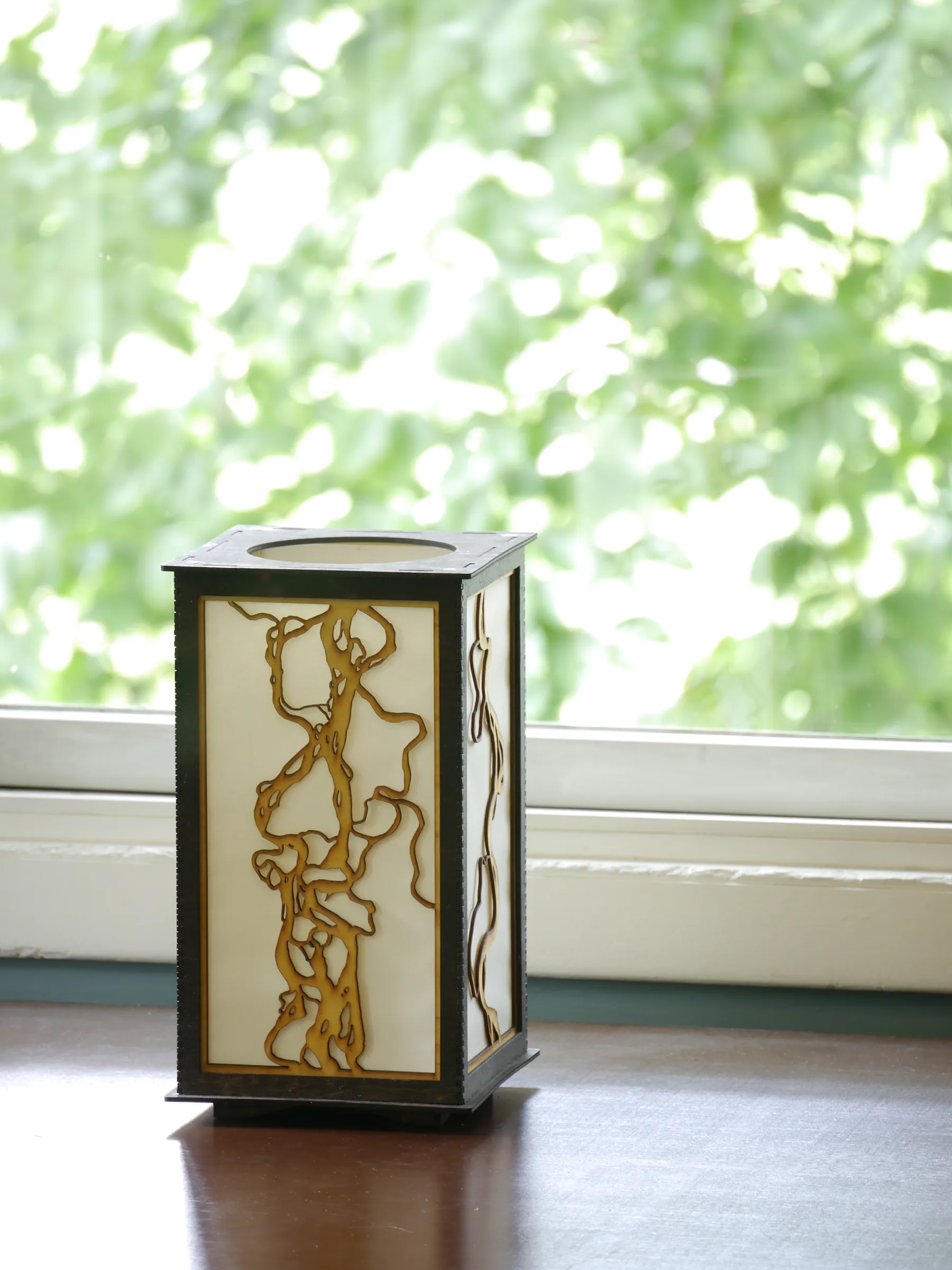
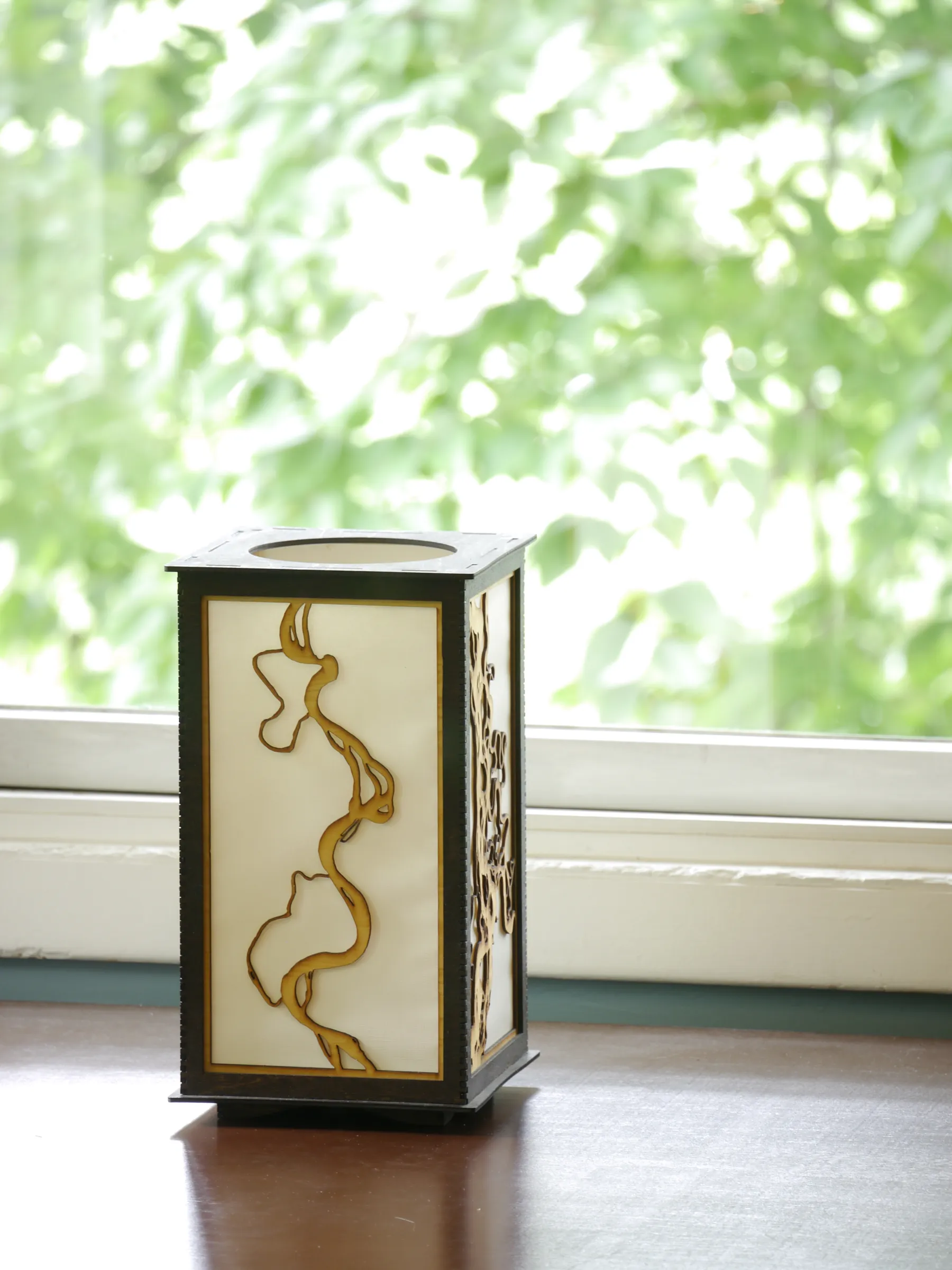
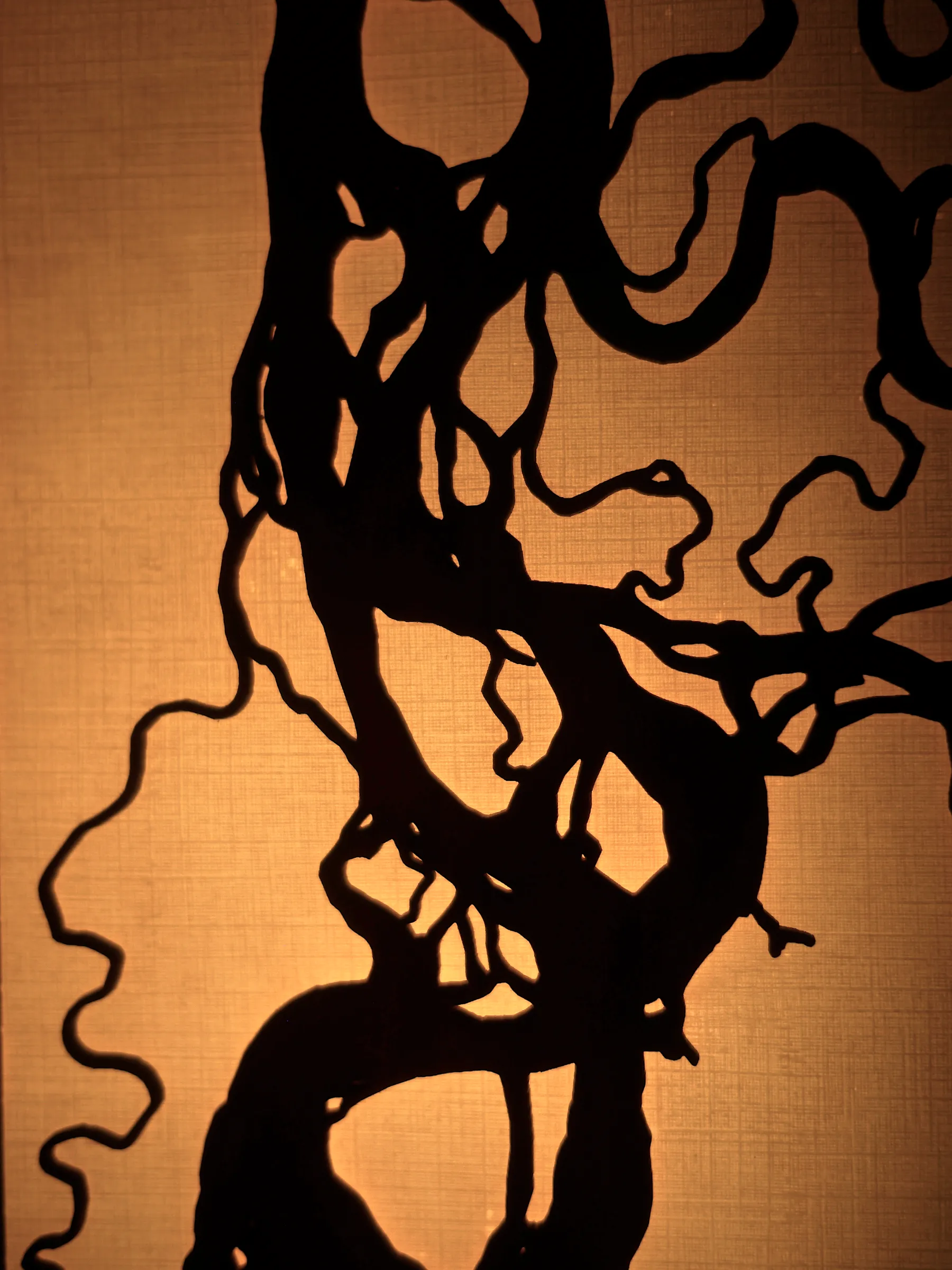
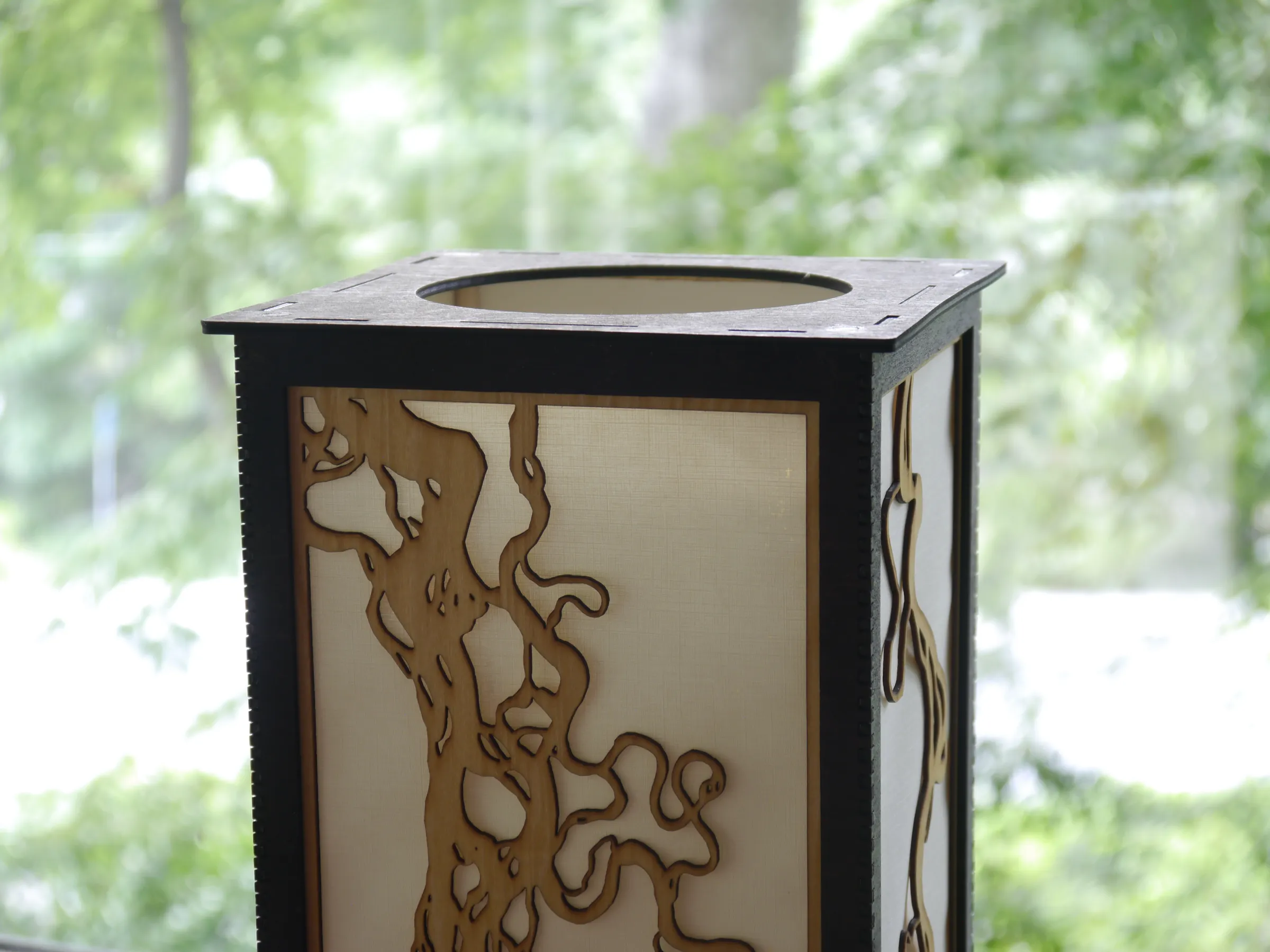
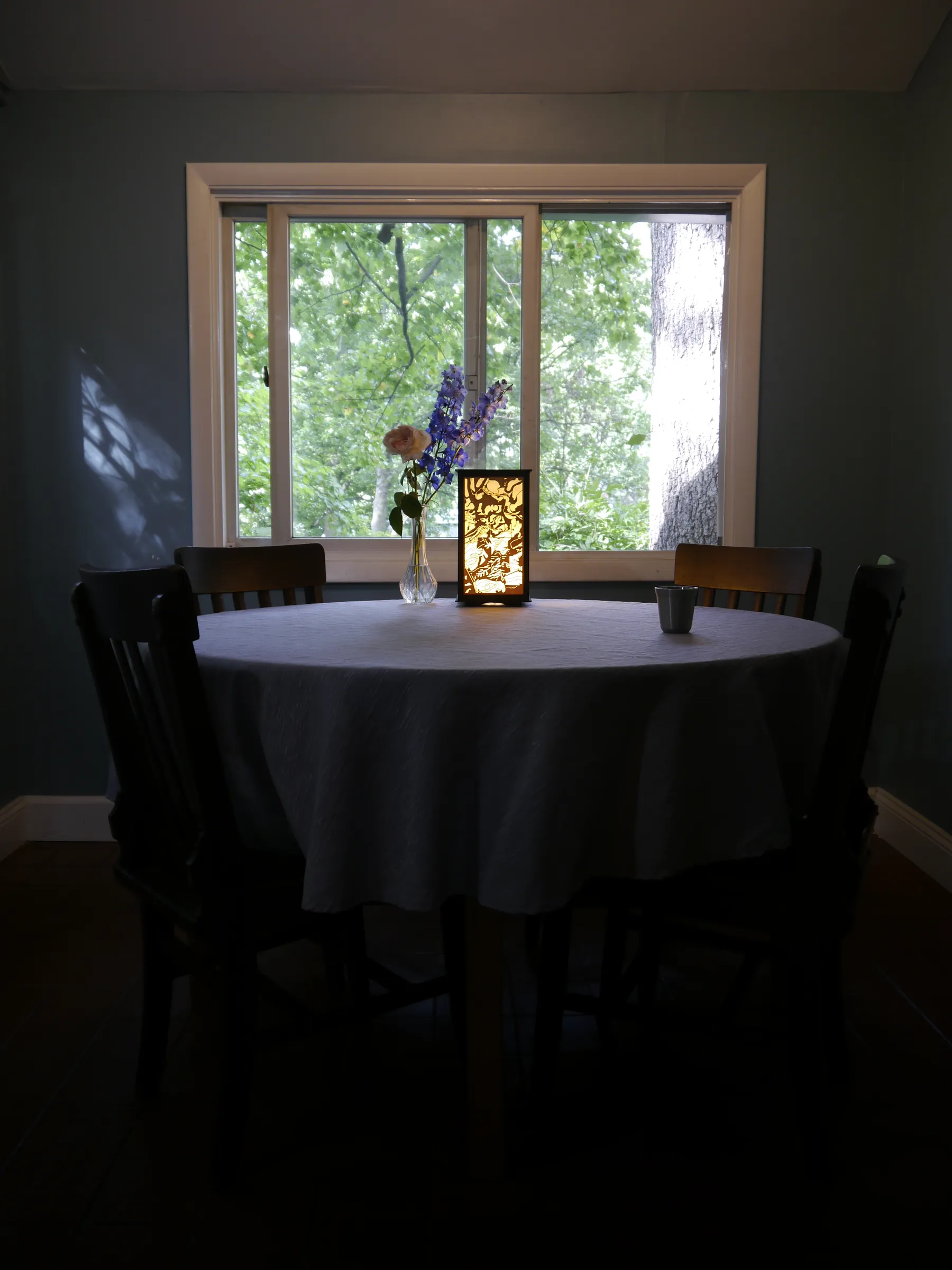
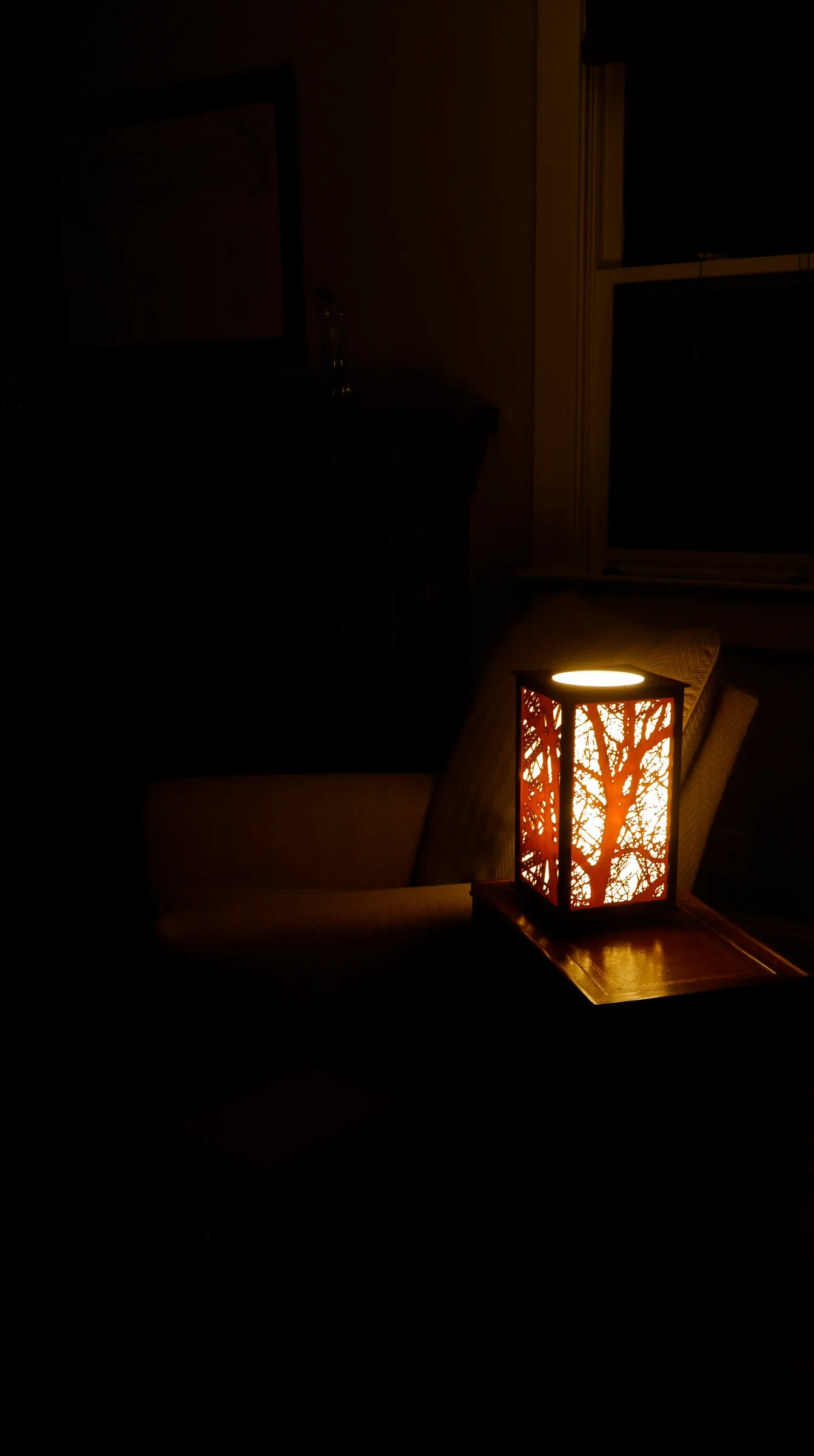
The morphology (shape) of the Yukon River varies dramatically across its
2000-mile course, over the vast, remote landscapes of the Yukon
Territories and Alaska. This variation arises chiefly from changes in
sediment load, incline of descent, and the stability of the banks.
The lamp is about the tension between those calculable
forces and their unpredictable realizations in nature.
It presents four moments in the Yukon's journey:
braids near its confluence with the Porcupine River at Fort
Yukon and in the Yukon Flats National Wildlife Refuge; and
narrower reaches near Galena, Alaska and Dawson City,
Yukon Territories.